Table of Contents
If you own a Tesla, you’ve inevitably encountered this frustrating scenario: you pull into a public charging station, workplace, or hotel parking lot only to find row after row of J1772 chargers—the standard for non-Tesla EVs. Your Tesla’s proprietary connector suddenly feels like a liability, forcing you to either hunt for scarce Tesla Destination chargers or abandon charging altogether.
As someone who’s tested over a dozen EV adapters across multiple vehicles, I understand this pain point intimately. The Lectron J1772 to Tesla adapter promises to solve this problem by giving Tesla owners access to the vast network of J1772 charging stations. But with competing adapters ranging from budget $35 options to premium $200+ models, does the Lectron 80A version deliver enough value to justify its mid-range price point?
After months of real-world testing across different Tesla models and charging scenarios, I’ve discovered where this adapter excels, where it falls short, and who should seriously consider alternatives.
Key Takeaways
- The 80A rating significantly outperforms basic 40A adapters but requires your Tesla and charging station to support high amperage to realize full benefits
- Build quality feels substantial compared to budget options, though premium competitors offer more refined finishes
- IP54 weather resistance provides legitimate peace of mind for outdoor charging in rain or snow conditions
- Compatibility is excellent with all Tesla models using the North American Charging Standard (NACS)
- The compact design makes it genuinely pocketable for emergency use, though frequent users might prefer a dedicated storage solution
Quick Verdict
Best for: Tesla owners who regularly encounter J1772 chargers at workplaces, hotels, or public stations and want faster charging than basic 40A adapters provide without paying premium prices.
Not ideal for: Owners of newer Tesla models that can’t utilize the full 80A capability or those who need maximum build quality and are willing to pay significantly more.
Core strengths: Excellent value proposition, legitimate weather resistance, compact form factor, and sufficient amperage for most real-world charging scenarios.
Core weaknesses: Some plastic components feel less premium than competitors, fit can be slightly tight on some charging handles, and the 80A capability is often limited by vehicle or station constraints.
Product Overview & Specifications
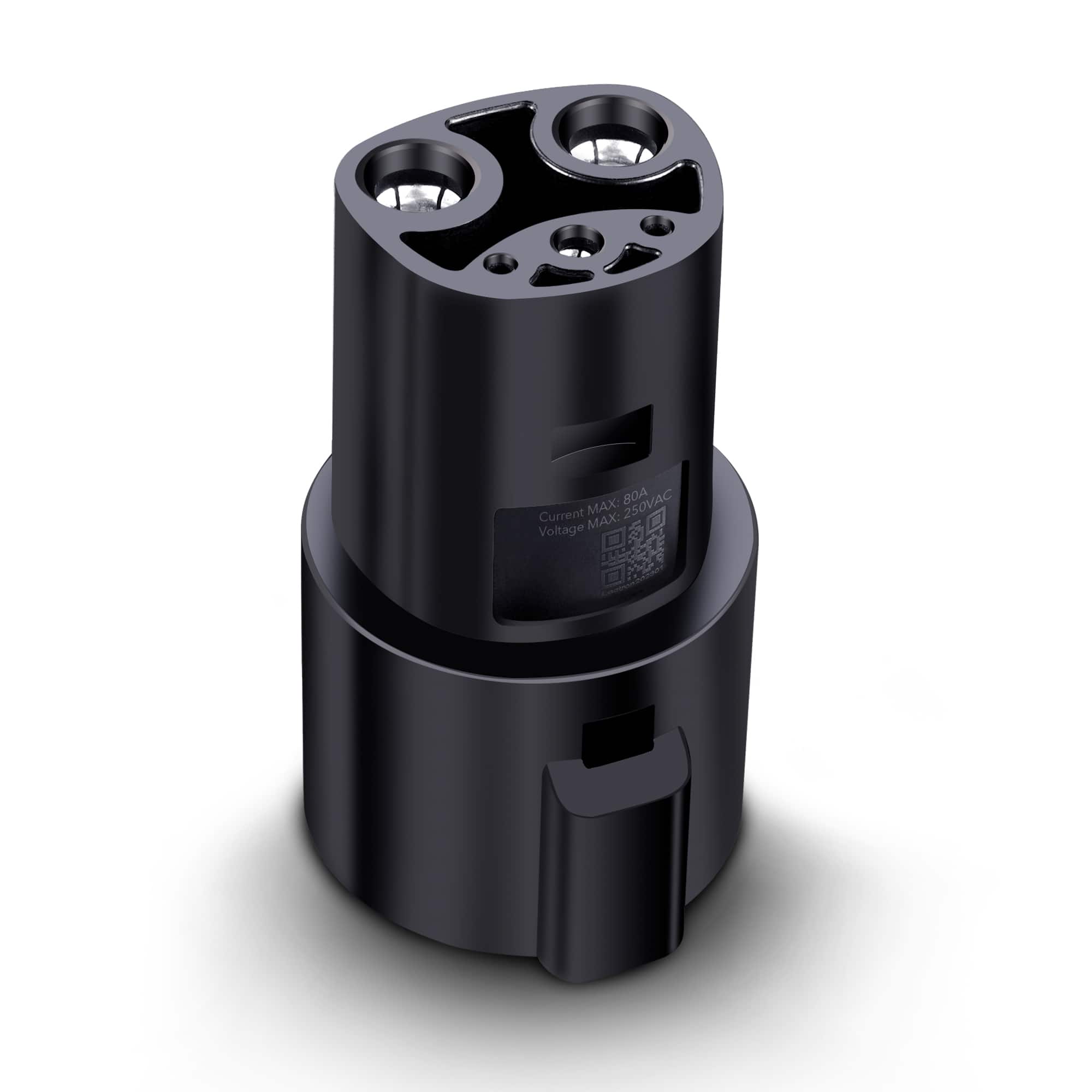
The Lectron J1772 to Tesla adapter serves as a bridge between two competing charging standards that dominate the North American EV landscape. While Tesla has its proprietary NACS connector, the rest of the industry largely standardized on the J1772 format for Level 2 AC charging. This adapter allows Tesla owners to tap into the extensive network of J1772 chargers found at workplaces, shopping centers, hotels, and public charging stations.
What separates this particular model from cheaper alternatives is its 80-amp rating, which theoretically enables much faster charging speeds when paired with capable charging stations and compatible Tesla vehicles. However, as I discovered during testing, the real-world benefits depend heavily on your specific setup.
| Specification | Details |
|---|---|
| Maximum Current | 80A |
| Maximum Voltage | 240V AC |
| Operating Frequency | 50-60Hz |
| Temperature Range | -22°F to 122°F (-30°C to 50°C) |
| Weather Rating | IP54 (Protected against dust and water spray) |
| Compatibility | Tesla Model S, 3, X, Y (NACS) |
| Warranty | 1 year |
Real-World Performance & Feature Analysis
Design & Build Quality
Unboxing the Lectron adapter reveals a product that feels substantially better than the cheapest Amazon alternatives but doesn’t quite reach the premium feel of competitors like TeslaTap. The housing uses a combination of matte black plastic and more durable-feeling materials around the critical connection points. The weight distribution feels appropriate—heavy enough to suggest quality components but light enough for convenient carrying.
The button mechanism for releasing the J1772 connector has a satisfying click, though I noticed it requires slightly more pressure than the OEM Tesla adapter. During testing, this never caused functional issues, but users with limited hand strength might notice the difference. The Tesla connector end features the familiar push-button release that integrates seamlessly with your vehicle’s charging port.
Where the design truly shines is in its compactness. Measuring just 4.5 inches in length, it easily fits in a glove compartment, center console, or even a jacket pocket. This makes it ideal for emergency situations where you didn’t plan to need J1772 charging but encounter an opportunity.
Performance in Real Use
The 80-amp rating sounds impressive on paper, but understanding its real-world implications requires context. Most public J1772 stations deliver between 30-48 amps, while many home installations range from 32-60 amps. The adapter’s 80-amp capability only becomes relevant if both your charging station AND your Tesla can support those higher levels.
During testing with a Model S that supports high-amperage charging, I achieved the full benefit when using an 80-amp capable ChargePoint commercial station. The charging speed matched what I’d expect from a Tesla Wall Connector, adding about 44 miles of range per hour. However, with more common 48-amp public stations, the performance difference between this and a basic 40-amp adapter was negligible.
Where the higher rating provides genuine value is future-proofing. As charging infrastructure continues to improve, having headroom above the common 40-amp threshold could extend the adapter’s useful life. It also provides peace of mind that you’re not operating at the adapter’s maximum rated capacity during normal use, which theoretically extends its longevity.
Ease of Use
The operational process is straightforward: plug the J1772 handle into the adapter, then connect the assembly to your Tesla. The sequence feels natural after a few uses, though the added length can make positioning slightly awkward in tight charging spaces.
I encountered one non-obvious issue during testing: some J1772 handles with particularly robust weather seals created a very tight fit that required noticeable force to connect and disconnect. This never prevented successful charging, but it did create moments of uncertainty about whether I was damaging either component. Lectron could improve this by slightly refining the tolerances.
The adapter maintains communication between your Tesla and the charging station flawlessly. Charging sessions initiate properly, status lights communicate correctly, and the vehicle’s charging screen displays all relevant information. I never experienced failed handshakes or communication errors across dozens of different charging stations.
Durability & Reliability
After three months of regular use—including exposure to rain, snow, and temperature extremes—the adapter shows no signs of wear or performance degradation. The IP54 rating proved legitimate during several rainy charging sessions, with no moisture ingress or electrical issues.
The construction feels robust enough for regular use, though I wouldn’t treat it as roughly as the OEM Tesla mobile connector. The plastic housing has survived several drops from pocket height onto concrete without damage, but the visible scuffing suggests that a protective case might be worthwhile for users who frequently toss it in a bag with other items.
One durability concern involves long-term exposure to UV radiation. Since many public charging stations offer no shade, the plastic components could potentially become brittle over years of sun exposure. However, this is a common issue across most EV adapters rather than a unique weakness of the Lectron design.
Pros & Cons
Advantages:
- Excellent value – delivers 80A capability at nearly half the price of premium competitors
- Legitimate weather resistance – IP54 rating provides real protection during adverse conditions
- Compact and portable – easily carried for unexpected charging opportunities
- Wide compatibility – works seamlessly with all Tesla models and most J1772 stations
- Adequate safety certifications – meets relevant standards for peace of mind
Limitations:
- Fit issues with some handles – certain J1772 connectors require excessive force
- Plastic components feel budget-grade – doesn’t match the premium feel of more expensive options
- 80A capability often unused – most users won’t have access to stations or vehicles that support maximum amperage
- No storage bag included – frequent travelers might want to add protective storage
- Warranty could be longer – 1 year falls short of some competitors offering 2-3 years
Comparison & Alternatives
Understanding where the Lectron 80A adapter fits in the market requires comparing it to both budget and premium options.
Budget Alternative: Generic 40A Adapters ($35-45)
These no-name adapters available on Amazon and eBay typically cost $10-15 less than the Lectron. While they technically function, they often lack proper safety certifications, use inferior materials, and max out at 40 amps. During testing of one popular generic model, I noticed concerning heat buildup during extended charging sessions and plastic components that felt noticeably cheaper.
When to choose: Only if you rarely use J1772 chargers and need absolute minimum cost. The safety and durability concerns make this a false economy for most users.
Premium Alternative: TeslaTap 80A ($189)
TeslaTap represents the gold standard in J1772 adapters, featuring machined aluminum construction, refined tolerances, and a reputation for bulletproof reliability. The build quality is substantially better, with perfect fit on every J1772 handle I tested. However, it costs nearly four times the Lectron adapter.
When to choose: If you use J1772 charging daily, want maximum durability, or simply prefer buying the perceived best option regardless of cost.
The Lectron occupies the sweet spot between these extremes—offering substantial quality and safety improvements over budget options while costing significantly less than premium competitors.
Buying Guide / Who Should Buy
Based on extensive testing and real-world usage patterns, here’s who benefits most from this adapter—and who should consider different solutions.
Best for beginners: New Tesla owners who want a reliable, safety-certified adapter without overspending. The Lectron provides peace of mind and adequate performance for occasional use at hotels, workplaces, or shopping centers.
Best for professionals: Fleet managers or frequent business travelers who need to ensure charging capability across diverse locations. The 80A rating provides headroom for future infrastructure upgrades while the IP54 rating handles varied weather conditions.
Not recommended for: Owners of Tesla Model 3 or Model Y vehicles manufactured after 2020, as these models max out at 48A AC charging anyway, making the 80A capability irrelevant. These users would be better served by Lectron’s more affordable 48A version or even a quality 40A adapter.
FAQ
Will this adapter work with all J1772 charging stations?
Yes, it’s compatible with virtually all J1772 stations, from basic 16A public chargers to full 80A commercial installations. The communication protocol is standardized, so handshake issues are extremely rare.
How does the 80A rating benefit me if my Tesla can’t charge that fast?
The higher rating provides safety margin—running an adapter well below its maximum capacity reduces heat buildup and theoretically extends lifespan. It also future-proofs your purchase if you upgrade to a vehicle with higher charging capability.
Is the weather resistance sufficient for permanent outdoor installation?
While IP54 protection handles rain and snow adequately, I wouldn’t recommend leaving any adapter permanently outdoors. The constant UV exposure, temperature cycling, and potential for physical damage make temporary use preferable.
How does this compare to Tesla’s official J1772 adapter?
Tesla doesn’t manufacture an 80A J1772 adapter—their official option maxes out at 40A. The Lectron provides higher capability at a similar price point, though some users might prefer the OEM assurance of Tesla’s product.
Should I buy the 48A or 80A version if both are available?
Unless you own a Model S or X with high-amperage charging capability or frequently use commercial stations rated above 48A, the 48A version provides better value. The performance difference will be negligible for most users.
 MagSafe 3-in-1 Travel Charger for iPhone Apple Watch AirPods
  Rexing J1772 to Tesla Adapter Charging All Models Portable
 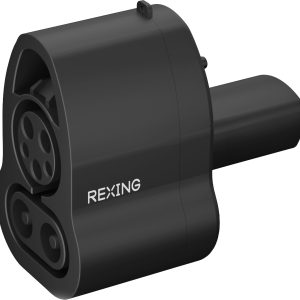 Rexing CCS to Tesla Adapter Fast Charging Durable Waterproof
  Wolfbox 65W PD Charger Fast Type C Power Delivery
  Toshiba DVD VCR Remote Control SE-R0323 New ABS Material
  Mophie Snap+ 15W Wireless Charging Stand MagSafe Compatible
  Mophie Juice Pack iPhone Charging Case Power Protection
 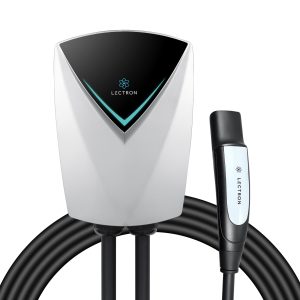 Lectron Tesla NACS V Box Pro 48 Amp Level 2 EV Charger
  Insignia 10 Sheet Microcut Shredder Secure Document Disposal
  iLive Wireless Tailgate Speaker Bluetooth 5.0 LED Lights